Pictures


|
Pictures
|
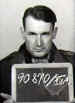
Lieutenant George Arthur Paull
Unit : "X" Troop, 2nd Airlanding Anti-Tank Battery
Army No. : 268829
Awards : Mentioned in Despatches.
George Paull was born on the 19th July 1909. He commanded "X" Troop of the 2nd (Oban) Airlanding Anti-Tank Battery at Arnhem, and though recommended for the Military Cross by Major Haynes this was reduced to a Mentioned in Despatches. His citation reads:
During the Airborne operations at Arnheim in September, 1944, Captain Paull was commanding a troop of 17 pounder Anti-Tank Guns in support of 4th Parachute Brigade H.Q.
On the afternoon of 19th September, Brigade H.Q., were occupying a position North of the railway Wolfhuizen - Arnheim about 1,000 yards East of the Wolfhuizen level-crossing. At approximately 1600 hours the Brigade H.Q. were ordered to withdraw South of the Railway, via a small culvert which enabled the smaller vehicles, such as jeeps, to pass under the railway, as it was thought the level crossing was controlled by the enemy. It was, however, necessary to take the 17 pounder guns with their 2 pounder portee towing vehicles up the embankment and across the railway, as they could not be taken through the culvert.
Captain Paull was ordered to proceed and find a rendezvous for his guns. One gun was safely taken across, but before it was possible to move the others the troops came under heavy fire, including mortar, and the gun crews were either killed, or wounded. There was no time to take the remaining two guns over the railway by the same means as the first. Captain Paull who had returned to the North side of the railway on learning what had happened, was ordered to try and take one gun direct over the railway, whilst the other proceeded down the road track to try and cross by the level-crossing at Wolfhuizen. This latter move was successful and on reaching the South side, I observed Captain Paull driving by himself along the railway track looking for a suitable place on the embankment to take his gun to safety. He proceeded for a distance of about 300 yards in full view of the enemy and under heavy fire.
By his courage and devotion to duty Captain Paull saved the remaining gun of his troop. His action was in accordance with the finest tradition of the Service.
Paull later became separated from "X" Troop and was wounded and taken prisoner. He wrote the following description of events which took place on Wednesday 20th September 1944:
Shortly after capture by the S.S, I was taken to a group of more captured Airborne types in a clearing in a wood. The group consisted of about thirty other ranks and two Officers, a glider pilot named Captain Ian Muir and an R.E. Lieutenant named Skinner. With the three of us at the head, we were marched down the road toward a German H.Q. After we had gone about a couple of miles everyone was tired and very thirsty, so I asked the Officer, an S.S. type if we could be fallen out and get the chaps something to drink. He agreed to do this at the next opportunity, which he did.
Just as we were halted a German with a Schmeisser jumped from one of the slit trenches lining the road and opened fire. Captain. Muir and Lt. Skinner got riddled and a number of chaps behind either killed or wounded. The strange part about it was that although I was immediately between Muir and Skinner, in fact shoulder to shoulder, I was not touched!
In the confusion I shouted at the S.S. Officer and asked what the hell he was doing and he thereupon snatched a rifle from a nearby guard and shot the German with the Schmeisser stone dead. He then apologised to me, and said the reason was that all the troops were in such a panic that at the sight of a 'Red Beret' they went berserk!
He asked me to give instructions to those remaining alive to remove their berets, which they did. Captain. Muir was still alive, but in a pretty bad way and pointed to his tunic pocket. I took out his wallet and he pointed to a picture of a person I took to be his wife and he endeavoured to make me understand to let her know what had happened.
At that moment two rather fat German Officers arrived in a staff car. One jumped out and gave me a kick in the ribs, snatching the wallet from me. Captain Muir then died in my arms. I attended as quickly as possible to any that were wounded and fortunately a German First Aid unit arrived and did what they could. The only people I can remember in the party were a Sgt. McIver and a Bdr. Monteith, the latter was badly wounded in the shoulder and I can remember tearing off a piece of his shirt to bandage it. I can also remember a Sergeant in the Cooks?
Being badly wounded in the mouth, but he was quickly whisked away by the Germans in a car, before I had a chance to do anything further.
Apparently very few people knew about all this. When I came home after the war I saw a notice in the Daily Telegraph from Captain Muir's wife and parents, seeking information. I replied and still have a letter of thanks from them both. But as I say, I have never met or heard of anyone who was involved in this unpleasant situation except reading about it in one of the books written on the Arnhem Battle. Someone must have passed it on.
Paul sent the following description of the incident to Muir's mother on the 17th July 1945:
"We were marched down the road, and here we joined another party that had been captured consisting of a Glider Pilot Officer who told me his name was Muir, & an R.E. officer named Skinner. The German officer formed us up into three's, placing us three officers at the head, your son on my left, Skinner on the right & myself in the centre. We marched for about a mile & then we were allowed to fall out by the side of a road for a rest, as we were all pretty tired. I sat and talked with your son, & we talked about our respective hectic adventures. We were then formed up again in the same order & continued marching. We had moved about half a mile & noticed by the side of the road odd German machine gun nests. As we approached a particular one, its gunner opened fire with a burst, your son & Skinner both fell, I [went] to Ian immediately but saw he was beyond all human aid, as was the other officer. I can assure you Mrs Muir Ian did not know a thing about it... In fairness to the German officer in charge of us, he immediately seized a rifle & shot the German machine gunner straight away. Some of the men were also killed & wounded when the... incident was over. I tackled the German officer & asked for an explanation, he could offer no reason except for the fact we were all wearing our red berets which he asked us to remove as these men had lost their head at the very sight of any of us. It [seemed] a bit difficult to believe but there it is. I went back to Ian with a view to removing any of his paper effects, but another German officer arrived in a car & forbade me to go near him & with the aid of a pistol forced me to rejoin the men & continue the march, & paid no heed to my requests."
Paull had presumably softened his recollection of events in the interest of not causing Mrs. Muir any further grief, he later wrote a slightly different account of the shooting which reads:
"...without warning, a German corporal got out of a slit trench and with a captured Sten, opened fire on us. Muir and Skinner, on either side of me, went down and complete surprise made me do the same. The shooting was terminated by the S.S. officer grabbing a guard's rifle and shooting the German corporal responsible. I got up, but saw that Muir and Skinner were riddled with the bullets. Skinner was dead, but Muir was trying to attract my attention to his breast pocket. I tried to open it, but was prevented by a fat German officer who knocked my hand away, punched me in the face, and said, "He is Kaput." There was an awful lot of shouting going on, all in German, so I knelt again by the side of Muir, who was trying to say something. I was again dragged away, and saw that Muir had died. There were a great many casualties as a result of this incident. I recall a C.M.P. [Corps of Military Police] Sergeant shot through the jaw and Bombardier Montieth with a bullet in his shoulder. The blonde S.S. officer tried to convey to me that the German corporal had panicked at the sight of our red berets, and told us to take them off in case it happened again. I almost lost my temper with him and through a sergeant who spoke a little English said, "The least you can do is arrange something about the wounded before marching us off." They were a pretty arrogant lot, to say the least, but I had satisfaction of seeing that the wounded were eventually attended to. To this day, I cannot make my mind up as to the real cause of this regrettable affair; I am inclined to think there was more to it than the red berets."
George Paull passed away on the 1st August 1993.
Thanks to Bob Hilton and Hugo Mitchell for this account.