Pictures

|
Pictures
|
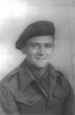
Signalman Stanley George Taylor
Unit : 1st Airborne Divisional Signals
Army No. : 3975331
On 16th November 1941 I made up my mind as it was my 18th birthday, to join one of the armed services, to do my bit towards the war that was going on. My two elder brothers had already been conscripted and were both abroad in the Army.
I went to the Recruiting Office at Renshaw Hall, Liverpool. I told the Clerk at the desk that I would like to join the Navy. He handed me a form to fill in and when I had completed it he pointed to a door I was to go through for a Medical. I went in, handed my form in and had a medical examination. When they measured my height I was only just over 5ft tall and was turned down for the Navy as I had to be at least 5ft 2½ins.
I went back into the main hall to the clerk who had first given me the form to fill in. He smiled at me and said "I see from this form you are too small". I said yes I was but would it have mattered if I had been conscripted. He said the rules for volunteers were very strict. I then said I would try the R.A.F. I went through the whole procedure again only to have the same thing happen. This time the minimum height was 5ft 2in and once again I was turned down.
Not to be defeated, I agreed to go in the Army. I was to join the 70th Battalion of the Welsh Regiment at Maindy Barracks in Cardiff. It was a young soldiers battalion. The battalion was formed for the purpose of guarding aerodromes mainly in the South East of England. We were billeted under canvas at Biggleswade, Bedfordshire. We did plenty of training for taking part in the fighting that was going on in Europe, but while in England we were quite busy guarding several operational aerodromes. I trained as a Wireless Operator and after two years I got a bit fed up with infantry and as I liked the Signal Platoon I asked the C.O. could I transfer to the Royal Signals. The C.O. arranged this for me and I was sent to a place near Huddersfield called Slaithwaite. The depot was a 3 storey mill. This unit were all soldiers from several regiments of the Army who had asked for transfer to Royal Signals. When we were doing Military Training on the parade ground, it was quite comical as some of the lads had come from the Light Infantry Regiments whose marching was very quick, 180 steps a minute. The ordinary infantry was 140 steps per minute and the Royal Signals was 120 steps per minute. You can imagine how it was with the lads doing various steps to what they had been used to. The marching was at times pretty ragged. We managed to overcome this raggedness after a while and to march quite well eventually.
It was during this time whilst on leave to attend my Brother's wedding that I first met Mill. I first saw her at the Wedding Reception of my brother Jimmy and I was immediately attracted to her. We courted for a while and became engaged prior to my joining the Parachute Regiment.
After completing training to B1 Wireless OP Standard, I along with a few more of the lads volunteered to join the Royal Signal Parachute Unit of the 1st Parachute Regiment and we were posted to Bufford Camp near Salisbury, Wiltshire. I was posted to a place near Chesterfield to prepare for my parachute jumping. This training was aimed at getting you prepared for actual parachute jumping and we had to pass various tests.
The first one was a 100 yds sprint which I passed with a time of 12 seconds.
The second test was to carry someone near your own weight for 20 yds. At that time I was 9st and managed to take a 10st man the 22 yds without dropping him.
The third test was a 5 mile run in Battle Order. I forget the allotted time for this test but I managed it O.K.
When we had completed all the tests we then went to Ringway Aerodrome to do our parachute training. I completed 9 jumps and earned my wings.
On returning to Bufford Camp we did a lot more training. The Landing in France had taken place and the Parachute 1st Division was earmarked for a big part to play in the advance to Germany. In order to do this, bridges over the Rhine had to be crossed. The first at Grave was given to the American 101st Airborne Division. The second at Nijmegen was given to the American 82nd Airborne Division. We in the British 1st Airborne Division were given the job of taking the third one further back at Arnhem in Holland.
The Air Armada took off from various aerodromes in the South of England. The first took off on 19th September 1944. The next took off on 20th September 1944. Arnhem was situated about 50 to 60 miles behind the German lines. We were to hold the bridge as long as possible until the advancing troops reached us. We held out for over a week but something went terribly wrong and we had a very rough time holding on. I was unfortunately wounded [Taylor was shot in the leg during the drop] and had to be taken to a first aid station, the Hartzenheim Hotel in Oosterbeek. This was my fourth day. The next day the First Aid post was taken by the Germans and a German stood in the middle of the floor and said in very good English "All you wounded men will consider yourselves Prisoners of War".
The following day we were taken to a Railway Station put in cattle trucks and taken to a P.O.W. camp at a place called Falling Bostel near Hanover, Stalag 11b.
My wounded leg had locked very stiff. When I arrived at Stalag 11b I had to go before a German Medical Board to see if I was fit enough to work. The interpreter who was a British Corporal and also a German collaborator told the Doctor what I had said. I was placed in a Solitary Confinement Block and put on a bread and water diet. Every third day I was given a small bowl of SKILLY which was a poor kind of hot soup and a slice of bread. I was told I could have this regularly if I agreed to go to work in a Sugar Beet Factory. I kept refusing for 18 days. On the 18th day two Germans with rifles and Bayonets came in with a German Officer and also R.S.M. Lord of Parachute Regiment. I at once got a bit panicky, I thought they were going to take me out and shoot me. I mentioned this to RSM Lord and he said you are only going to see the Camp Commander don't worry yourself, it is to your own advantage.
When I came before the Commander he spoke to me in very good English.
"You are only a little man, why will you not work?"
I walked to his desk and showed him my leg and asked how I was supposed to
carry anything with my leg like it was. He told me I would be well fed. When I
realised he was a reasonable chap I said to him "I am a soldier and you
are also. I have been trained not to help the enemy war effort and I think you
will have been told this as well." He then asked me if I would be willing
to be a Batman to my own officers. I said "Certainly Sir".
I was taken by car to a Railway Station. The two soldiers that had brought me from the cell took me to the station and got on the train with me. I was taken to Oflag 79 near Brunswick. I was brought into the camp in a small truck just to the camp entrance. There was a British Colonel there and a couple of German soldiers. The Colonel came to me and pointed to one of the huts and told me I was to be billeted in that one. I then said "Excuse me Sir, but are the men in that hut clean and free of lice?" He wanted to know why I asked this and I replied that I was full of lice and would not like to pass them on to people who were clean. He thanked me for telling him this. I was then taken in the small truck again and driven to a place about 5 miles away from the camp which was a de-lousing centre. I had to strip naked and walk under a shower. The water was very hot and they poured some sort of liquid soap over me which apparently got rid of all the lice and nits. When I came out I was like a boiled beetroot but at least I was clean once again and I was then able to mix with the other prisoners.
The Colonel who was also the Senior Doctor in the Camp Hospital asked me to have my leg seen to. I at once agreed and he introduced me to a German Masseur who started me on heat treatment and started to bend my leg a little bit at a time. It was very painful. He then said I was to do my exercises by bending me knee as much as possible. After a couple of weeks of doing this I was walking normal again. Thanks to that German Masseur I now only have the scar of the wound to remind me of it.
I will now relate a couple of amusing incidents that happened in Oflag 79.
I was standing in the doorway of the billet one day and a German guard came through the camp gate carrying a newly made toilet seat. About an hour later I saw him going out again carrying a badly broken toilet seat. That evening when the roll call was taken an Officer was missing, apparently it was a Major. He had taken the chance and overcome the German who was fixing the toilet seat and swapped clothes with him. It was the Major I saw going out not the German who was later found bound and gagged.
The Major was free for about 10 days but was brought back for trial and punishment.
The other incident was when I was at the Hospital for treatment on my leg. One day a party of German soldiers arrived and started searching every nook and cranny in the Hospital. When the Senior Doctor asked the Officer in charge what they were doing he said they had reason to believe that a wireless was hidden somewhere. The Doctor pulled out a square box stool for the Officer to sit on whilst his men searched. This box had a padded seat and inside it was the wireless they were looking for. This wireless was the one used by us to get all the war news from the B.B.C., news bulletins with the British Officers typed out and sent around the huts for us to read. The whole time his men searched the German Officer was sitting right on top of the wireless and they never did find it.
At the beginning of May 1945, the Oflag was liberated by American Forces. We were all lectured by an American Officer who told us we could go out when we liked to look around and he told us that if we saw any Germans driving cars we could stop them as a lot of high ranking Germans were trying to avoid capture. He told us we could take the car off them and drive it to the American compound.
I was with 3 other of my hut mates when we encountered 4 Germans in a big American Buick Staff car. One of the chaps with me was a Sergeant and he drove to an American depot and we filled up with petrol. We used the Buick for a couple of days sight seeing. Then one day we were told to assemble and told we could make our way to an aerodrome about a mile or two from the camp. Dakota planes were arriving quite frequently and each one was loaded up with 40 passengers on a first come first served basis. The planes flew us to Brussels in Belgium where we were rigged out with new uniforms and then sent to other planes to fly out to England. On arrival in England I was sent to a Demob Centre to get my Demob clothes.
I was discharged from the Army, medically unfit. I had been having a lot of biliousness and was told I was suffered from Diverticulitis.
My thanks to Lorraine Wilson for this account.